 02 9589 2342
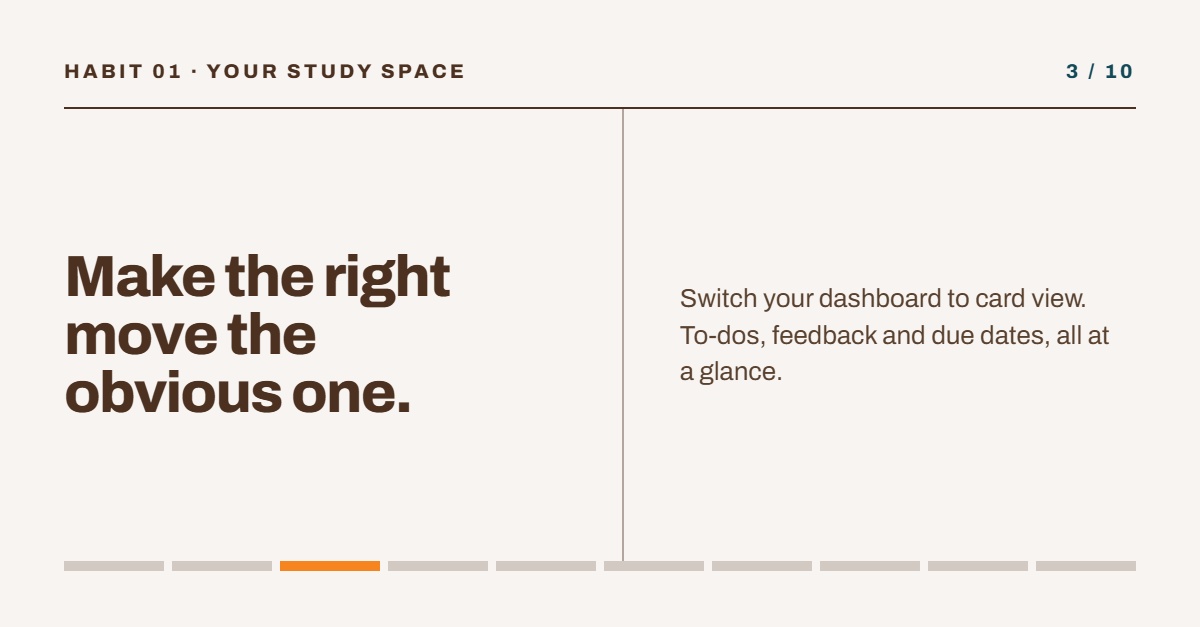
Set up your study space so the right move is the obvious one.
Design your environment. If the right action is easy to see and easy to reach, you will do it more often without having to rely on willpower. In your online campus, that means knowing exactly what each part of your dashboard is for, so you are never guessing where to go next, when an assessment is due or how to ask for support.
- Switch your dashboard to card view: click the three dots in the top corner to make this change. This view will also show your to-do list, recent feedback and due dates at a glance.
- If your course includes a fundamentals manual (Revit or ArchiCAD, Cert IV only), remember it is a reference book you dip into when directed, not where you do your day-to-day work. Diploma students work straight from the course modules.
- Always send questions through Educator Assistance rather than a direct email. It goes straight to a monitored inbox all educators can see, and replies are typically turned around within 24 hours.
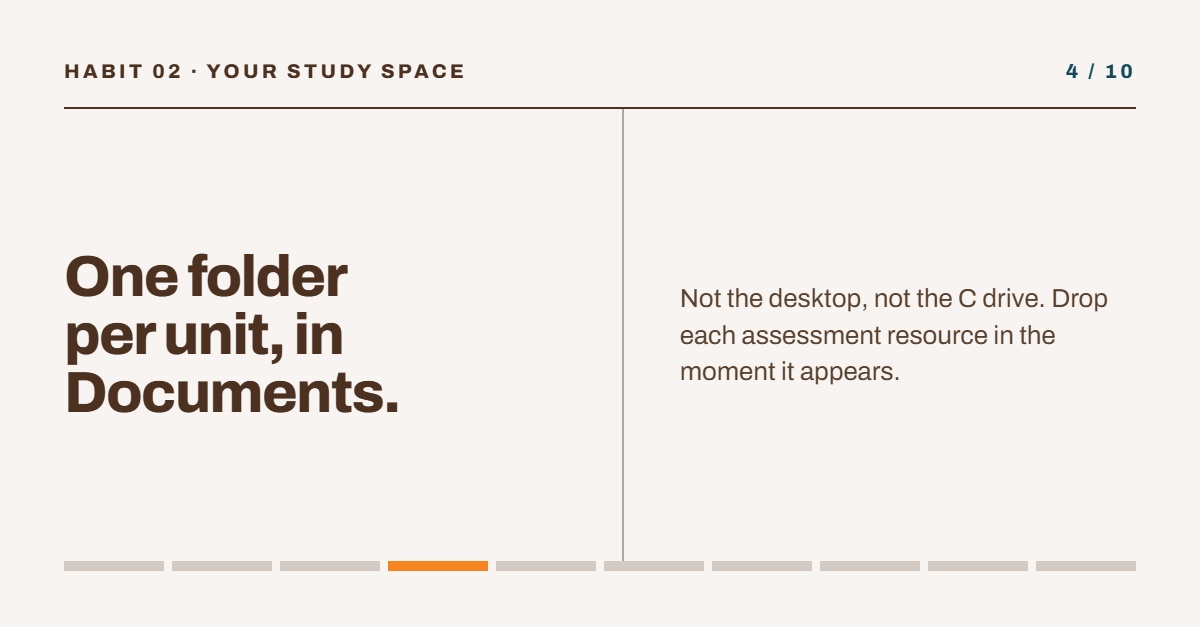
- Create one folder per unit in your Documents (not your desktop, not your C drive). Download your assessment resources into it as soon as they are available.
Build a weekly rhythm you can stick to.
Self-directed learning does not mean unstructured. Aim for around 10 hours a week to keep moving through the course at a steady pace. The trick, according to Clear, is to stack a new habit onto one you already have (Clear calls this habit stacking) and is designed to make starting a task as easy as possible.
- Start with a goal to study for 15 minutes. This will naturally turn into longer study periods.
- Keep a notebook (a physical one works well). Date every entry so you can see your own pattern of when and how often you sit down to work.
- At the end of each session, write a short note to yourself : what you were doing and exactly where to pick it up again (the module, assessment number, topic or, for Cert IV, the manual page). Next time you choose to study, you are productively working again in minutes as you can identify where you stopped in your last session.
- Stack your study session onto something you already do, for example straight after dinner or straight after the kids go to bed, so you do not have to decide when to start.
- Note down shortcut keys as you learn them and make a point of using them every session. Small efficiencies add up quickly.
- Set a small, specific goal for each session (for example, “get all the windows in”) rather than a vague one like “work on the next assessment.”
Approach each assessment like a professional in industry.
Every time you complete a small action well, you cast a vote for the type of person you are becoming. Every assessment is a chance to practise being someone who works like an industry professional. This is called identity-based habits: the idea that while you are studying, you start to act in a manner that reflects the industry professional you want to be.
- Before you start, spend 10 to 15 minutes reviewing all the assessment resources provided. Knowing what is there gives you clarity about what to focus on.
- Use the assessment checklist as a genuine self-check, not a box-ticking exercise. If something does not look right, flag it through Educator Assistance before you submit, rather than after.
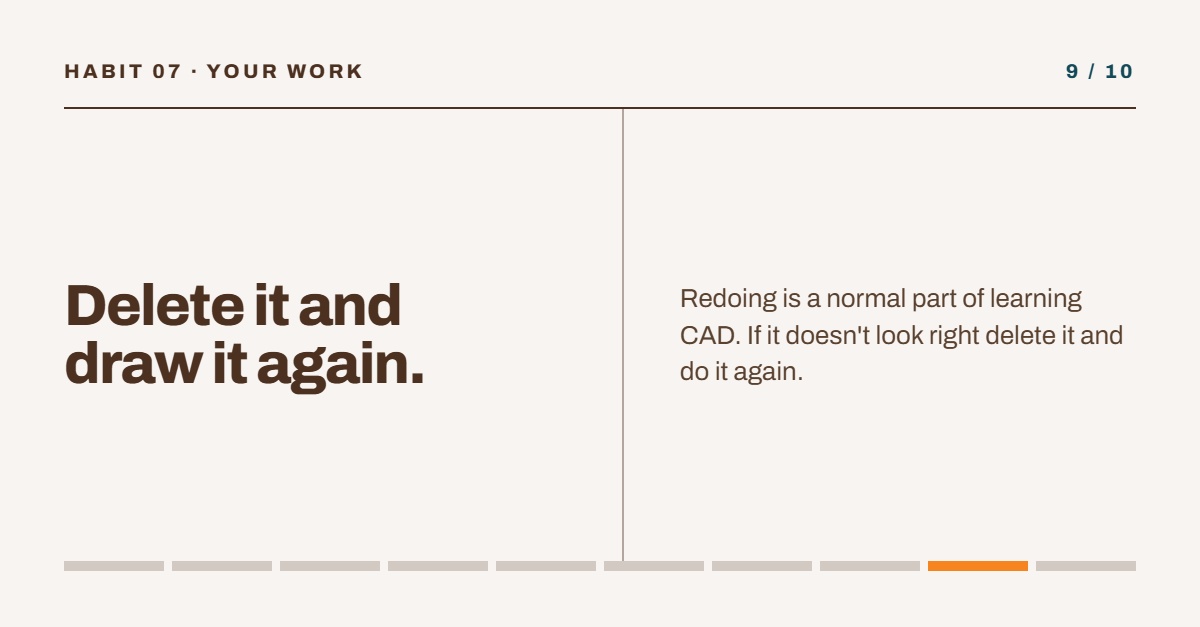
- Do not be afraid to delete and redo. It is a normal, expected part of learning CAD, and it is often faster than trying to fix something you know isn’t correct.
- Save a new version of your file before you try something risky, and save a checkpoint version once each assessment is marked off. If things go wrong later, you always have somewhere to go back to.
- Flick constantly between 2D and 3D as you draw. Getting used to checking your work in both views is a habit that pays off for the rest of your career.
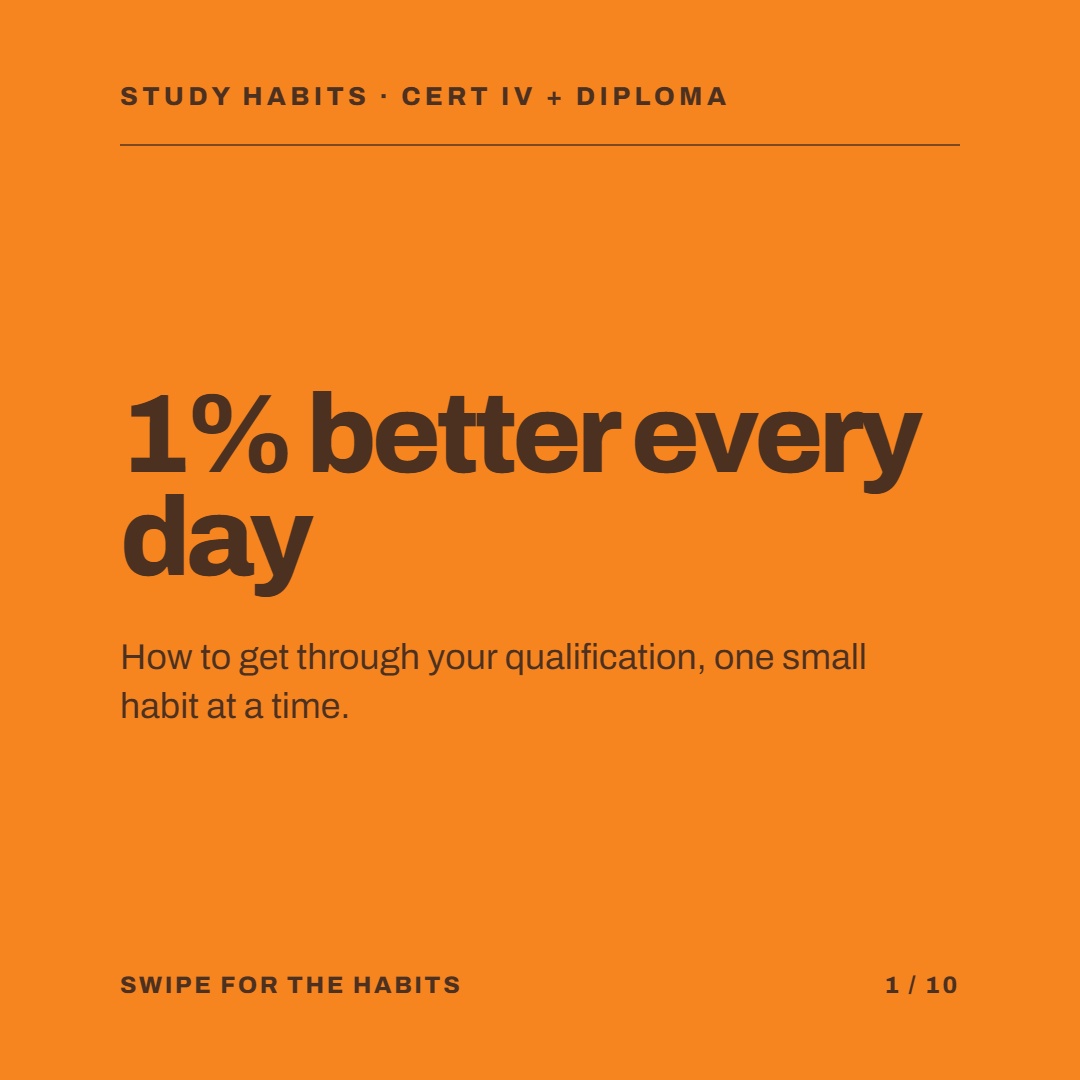
1% better every day.
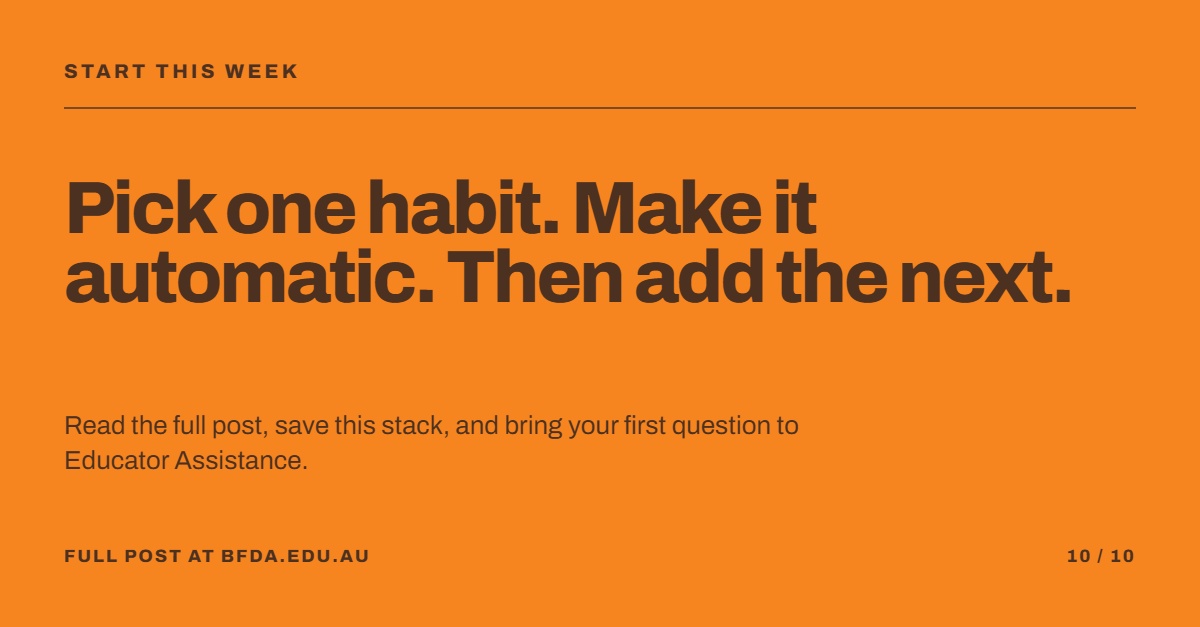
You do not need to overhaul the way you work overnight. Pick one habit from above, stack it onto something you already do, and let it become automatic before adding the next. That is how the whole qualification gets done: not in one big push, but one small, repeatable habit at a time.
REMEMBER: Don’t wait to be motivated to do work. Motivation comes with taking action.