
 02 9589 2342
Reassessing what comes next 
After decades working across the building industry, Michael understood construction better than most. He had managed teams, worked in sales leadership roles, completed technical training earlier in his career, and spent years around builders, suppliers, and construction systems. What he had never done was formally document residential projects using modern drafting software, that changed after building his own home.
Relocating away from the pace of corporate life, he purchased regional property, obtained his owner builder licence, and committed to designing a different kind of future. Over three years, through bushfires, flooding, COVID disruptions, and supply shortages, he completed his home build while reassessing what he wanted professionally.
“I’d been drawing all my life,” he said. “But none of it on computer. I always had people I just told what to do.”
Why the Cert IV in residential drafting made sense
The decision to enrol in the Cert IV in Residential Drafting was came from Michael’s motivation to upskill. He wanted to understand the technical side of digital drafting properly. He develop confidence using industry software and gained the skills to document future projects independently.
Today, he is already applying those skills to his own developments and private projects.
“I’ll save myself 50 grand this year alone, being able to draw it up and submit it to council.”
For many students entering a building design career pathway one challenge is accessible study. Traditional study models often require fixed schedules, campus attendance, and significant disruption to work and family commitments. Studying a drafting qualification online allowed him to continue travelling, managing projects, and living regionally while progressing through the course.
“Sometimes we were in a national park in the middle of nowhere and I’m doing coursework,” he said.
Developing technical confidence

The learning process itself became part technical training, part professional reinvention. Beyond residential drafting principles, the course strengthened broader digital capability. Revit, online collaboration, documentation systems, and digital workflows all became part of everyday practice.
“Not only was I learning the design side and putting it down on computer, but your general computer skills get a big boost as well.”
Inside the course, the moments that stood out most were often tied to design intelligence rather than software alone. One exercise involving solar studies and environmental modelling left a lasting impression.
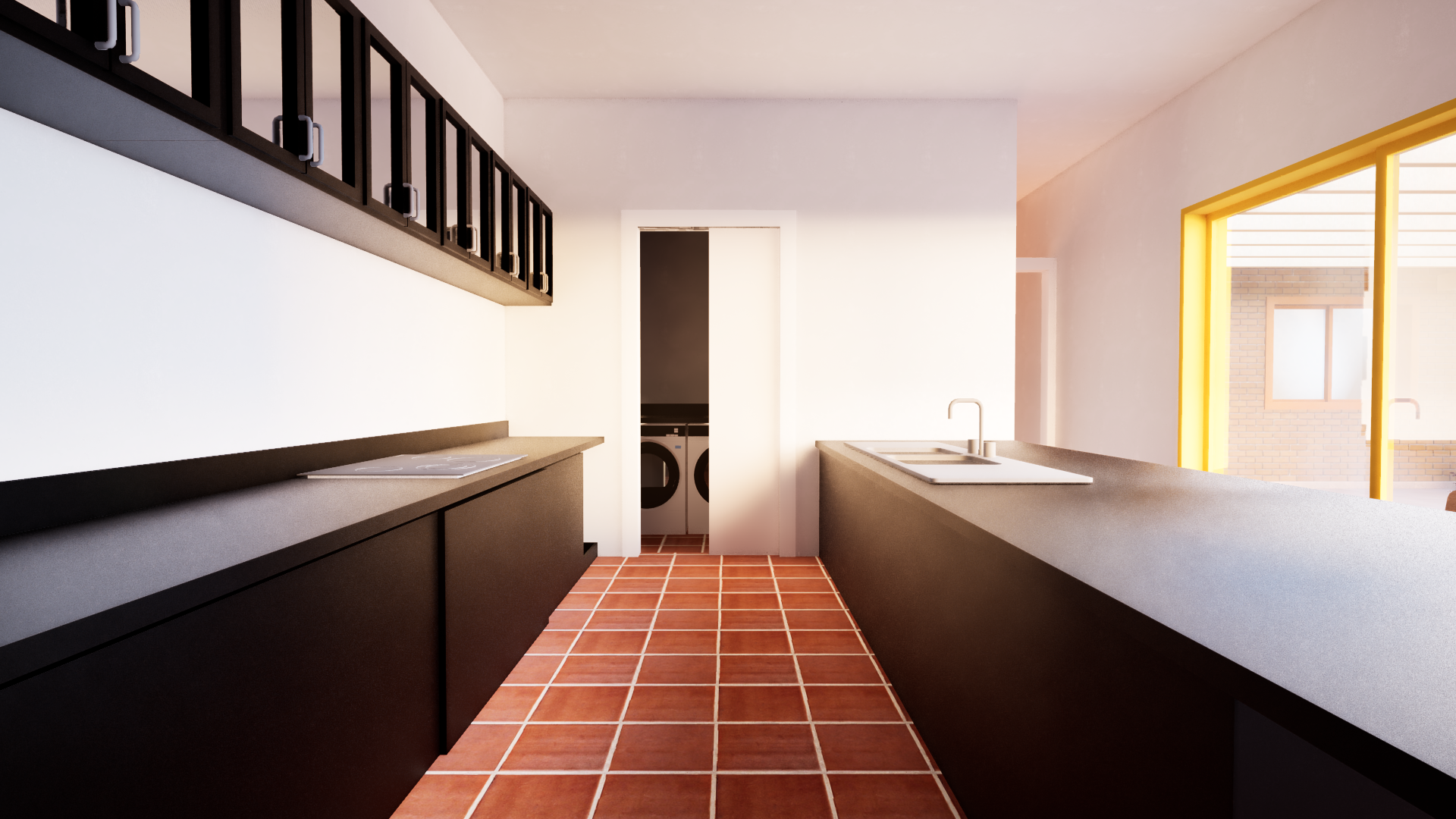
“The one thing that really blew me away was how you could set the sun settings through a kitchen window at a certain time of day and a certain time of year.”
Learning to think like a draftsman
That shift in perspective is something BFDA Head of School Teresa regularly sees among mature students entering the industry.
“People often come to us with deep construction knowledge already,” Teresa explained. “The challenge is translating that experience into digital design thinking and technical documentation capability. Once that clicks, students begin seeing projects completely differently.”
The process was not without challenges. Living regionally meant internet reliability initially became a barrier. Learning complex software also required persistence, especially after long periods away from formal study. But rather than expecting a rigid, step by step training model, the course encouraged problem solving and industry style thinking.
“I found you were much better off sending an email or making a phone call to clarify it before you got too far into it,” he said.
That collaborative mindset became part of the experience. Through mentors, industry conversations, and BFDA’s online learning community, he built confidence not only in the software, but in his ability to operate within the residential drafting space professionally.
A different definition of career progression 
Importantly, the qualification also clarified what he did not want.
Having spent years in high pressure management roles, he has little interest in returning to corporate stress.
“All of a sudden you start seeing things from a totally different perspective.”
Instead, the focus now is independence, flexibility, and long-term project work aligned with the lifestyle he deliberately built for himself.
The qualification has opened multiple pathways. He can work on his own residential projects, assist others locally, or step into residential drafting roles if he chooses.
Advice for future students
For future students considering the Cert IV in Residential Drafting, his advice is practical.
Ask questions early. Stay engaged with the software regularly. Write things down. Most importantly, understand that technical confidence develops over time through repetition and real application.
Considering your own drafting career pathway?
For people looking to formalise existing industry knowledge, transition into residential drafting, or create greater control over their professional direction, BFDA’s Cert IV in Residential Drafting offers a pathway grounded in technical skill, industry relevance, and practical capability.
Explore the Certificate IV at BFDA.